

NCEA Special Assessment Conditions
Special Assessment Conditions can provide approved support or adjustments for eligible students so they can access NCEA assessments in a way that reflects their individual assessment needs.
Understand SACWhat Are NCEA Special Assessment Conditions?
Special Assessment Conditions, often called SAC, are approved assessment arrangements for eligible students who have specific learning, medical, physical, sensory or other needs that can affect how they access an assessment.
The purpose is to provide appropriate support during assessment while maintaining the requirements of the NCEA assessment.
Support Access to Assessment
SAC can help an eligible student access an assessment when their individual needs would otherwise create a barrier.
Individual Needs Matter
The type of support depends on the student’s needs and the requirements of the assessment.
Approval Is Required
Special Assessment Conditions are not automatically available. Eligibility and approval requirements apply.
Special Assessment Conditions provide approved support or adjustments for eligible assessment situations. They do not create a separate NCEA pathway or automatically change the assessment standard.
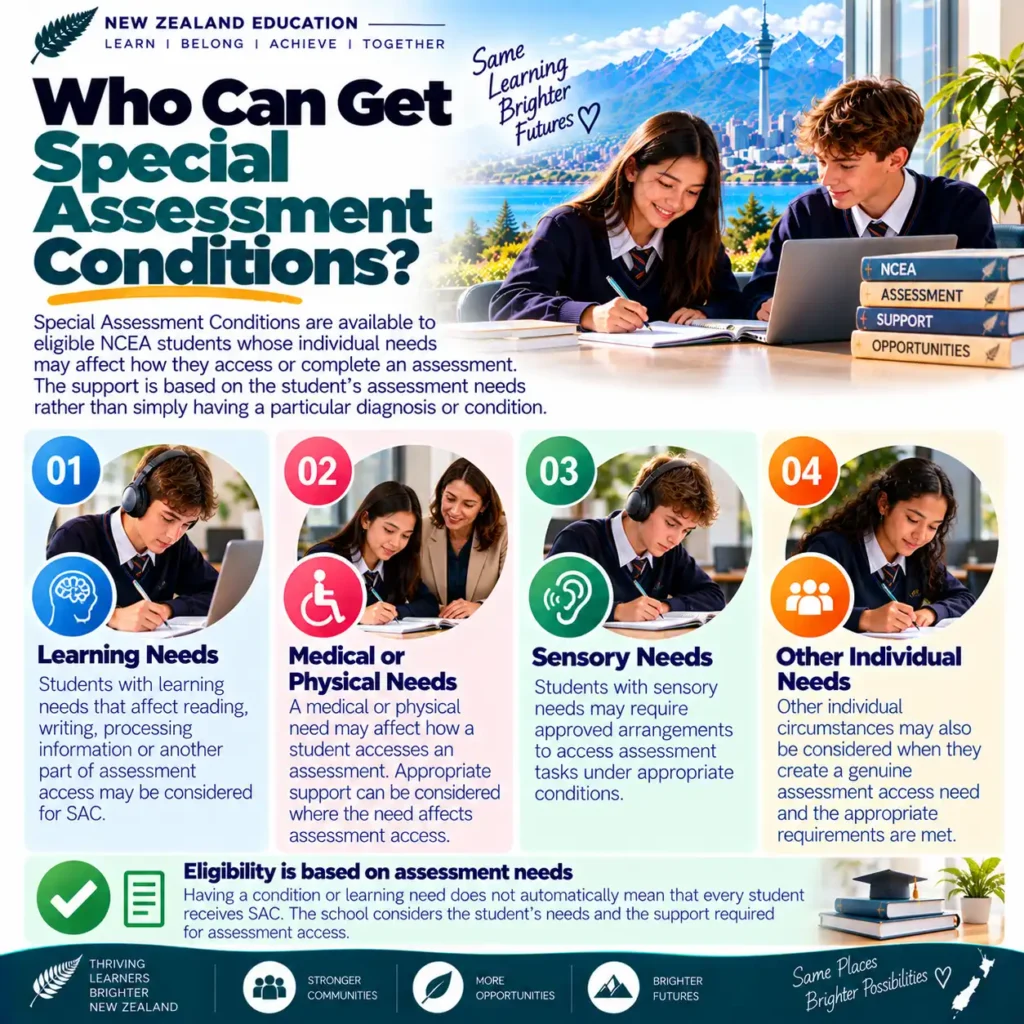
Who Can Get Special Assessment Conditions?
Special Assessment Conditions are available to eligible NCEA students whose individual needs may affect how they access or complete an assessment. The support is based on the student’s assessment needs rather than simply having a particular diagnosis or condition.
Learning Needs
Students with learning needs that affect reading, writing, processing information or another part of assessment access may be considered for SAC.
Medical or Physical Needs
A medical or physical need may affect how a student accesses an assessment. Appropriate support can be considered where the need affects assessment access.
Sensory Needs
Students with sensory needs may require approved arrangements to access assessment tasks under appropriate conditions.
Other Individual Needs
Other individual circumstances may also be considered when they create a genuine assessment access need and the appropriate requirements are met.
Having a condition or learning need does not automatically mean that every student receives SAC. The school considers the student’s needs and the support required for assessment access.
Types of NCEA Special Assessment Conditions
Special Assessment Conditions can take different forms depending on the student’s individual assessment needs. The support is designed to improve access to an assessment while keeping the assessment requirements in place.
Extra Time
Additional time may be provided where a student’s needs affect the speed at which they can access or complete an assessment.
Reader or Writer Support
Approved assistance may support eligible students who have difficulty reading assessment material or recording their responses independently.
Computer Use
An approved digital arrangement may be available when a student’s assessment needs affect their ability to produce written responses.
Separate or Special Environment
Some students may require an assessment environment that reduces barriers associated with their individual needs.
Other Approved Support
The appropriate arrangement depends on the student’s documented needs and the assessment requirements. Support is not automatically the same for every student.
Support Must Be Appropriate
SAC should address a genuine assessment access need. It is not intended to give an unfair advantage or change what the assessment is designed to measure.
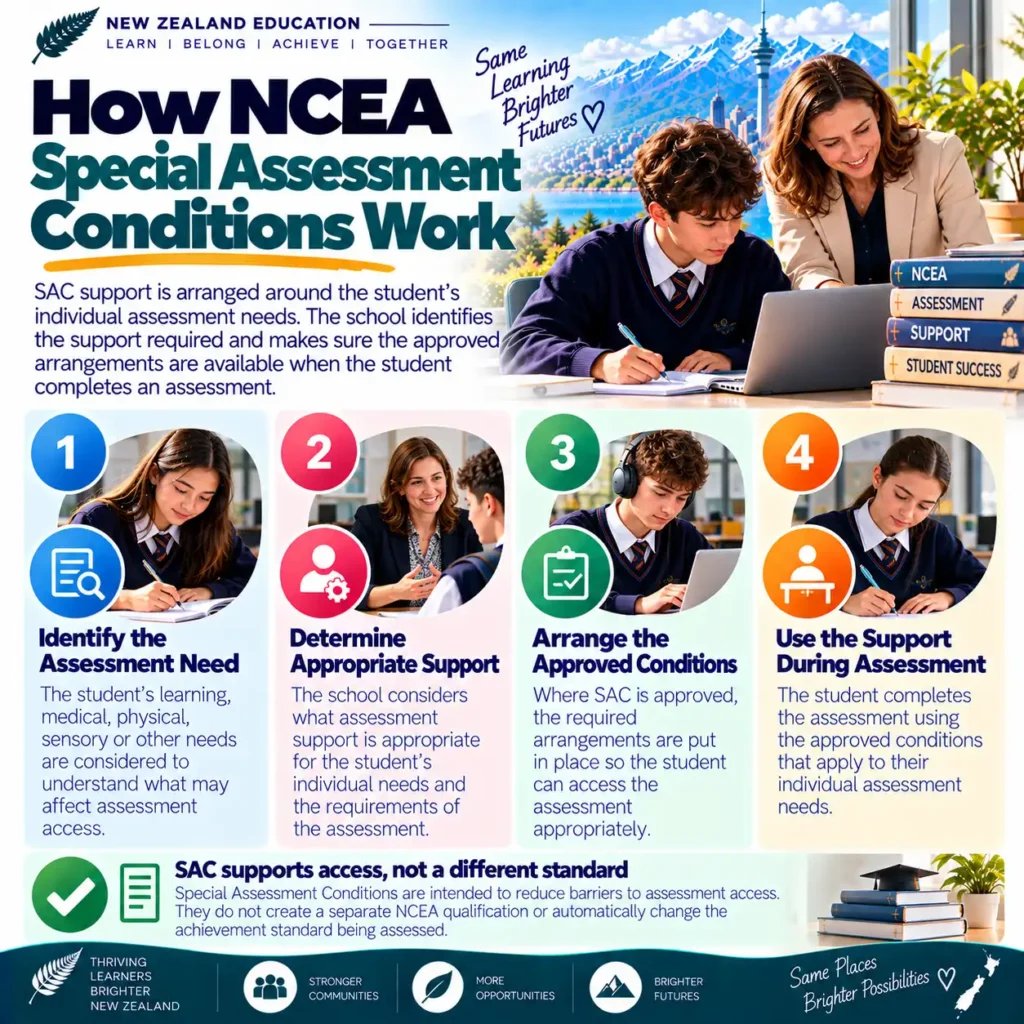
How NCEA Special Assessment Conditions Work
SAC support is arranged around the student’s individual assessment needs. The school identifies the support required and makes sure the approved arrangements are available when the student completes an assessment.
Identify the Assessment Need
The student’s learning, medical, physical, sensory or other needs are considered to understand what may affect assessment access.
Determine Appropriate Support
The school considers what assessment support is appropriate for the student’s individual needs and the requirements of the assessment.
Arrange the Approved Conditions
Where SAC is approved, the required arrangements are put in place so the student can access the assessment appropriately.
Use the Support During Assessment
The student completes the assessment using the approved conditions that apply to their individual assessment needs.
Special Assessment Conditions are intended to reduce barriers to assessment access. They do not create a separate NCEA qualification or automatically change the achievement standard being assessed.
How to Apply for Special Assessment Conditions
Students and their families should talk with the school as early as possible when assessment support may be needed. The school can consider the student’s needs and arrange the appropriate Special Assessment Conditions.
Talk to Your School
Speak with the school about the student’s assessment needs and any support that may be required.
Discuss the Required Support
The school considers how the student’s needs affect assessment access and what type of support may be appropriate.
Provide Supporting Information
Where required, relevant information or documentation can help the school understand the student’s assessment needs.
Use the Approved Arrangements
Once the appropriate arrangements are established, the student can use the approved support for applicable assessments.
Assessment arrangements can require planning. Contact the school early rather than waiting until an assessment is about to take place.
Evidence and Documentation for Special Assessment Conditions
Information about a student’s assessment needs helps the school understand what support may be appropriate. The evidence required can depend on the student’s individual circumstances and the type of support being considered.
Information About the Student’s Needs
The school may need relevant information that explains how the student’s needs affect access to assessment.
Relevant Professional Information
Where appropriate, professional or specialist information may help the school understand the student’s needs and the support required.
Assessment Impact
The important consideration is how the student’s individual needs affect their ability to access or complete assessment tasks.
School Records and Planning
The school can use relevant information to plan appropriate assessment arrangements and ensure the agreed support is available.
If a student’s needs change, the school should be informed so that assessment support can be reviewed and arranged appropriately.
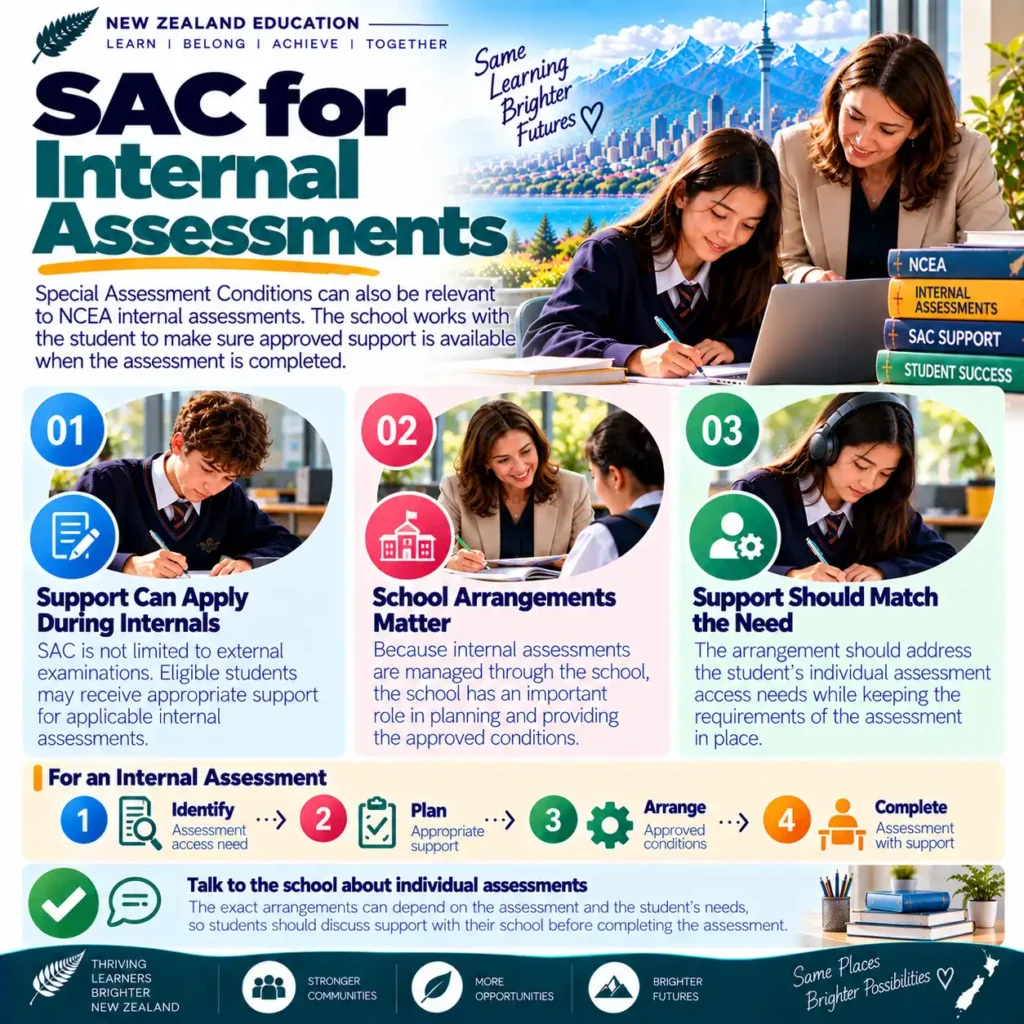
SAC for Internal Assessments
Special Assessment Conditions can also be relevant to NCEA internal assessments. The school works with the student to make sure approved support is available when the assessment is completed.
Support Can Apply During Internals
SAC is not limited to external examinations. Eligible students may receive appropriate support for applicable internal assessments.
School Arrangements Matter
Because internal assessments are managed through the school, the school has an important role in planning and providing the approved conditions.
Support Should Match the Need
The arrangement should address the student’s individual assessment access needs while keeping the requirements of the assessment in place.
The exact arrangements can depend on the assessment and the student’s needs, so students should discuss support with their school before completing the assessment.
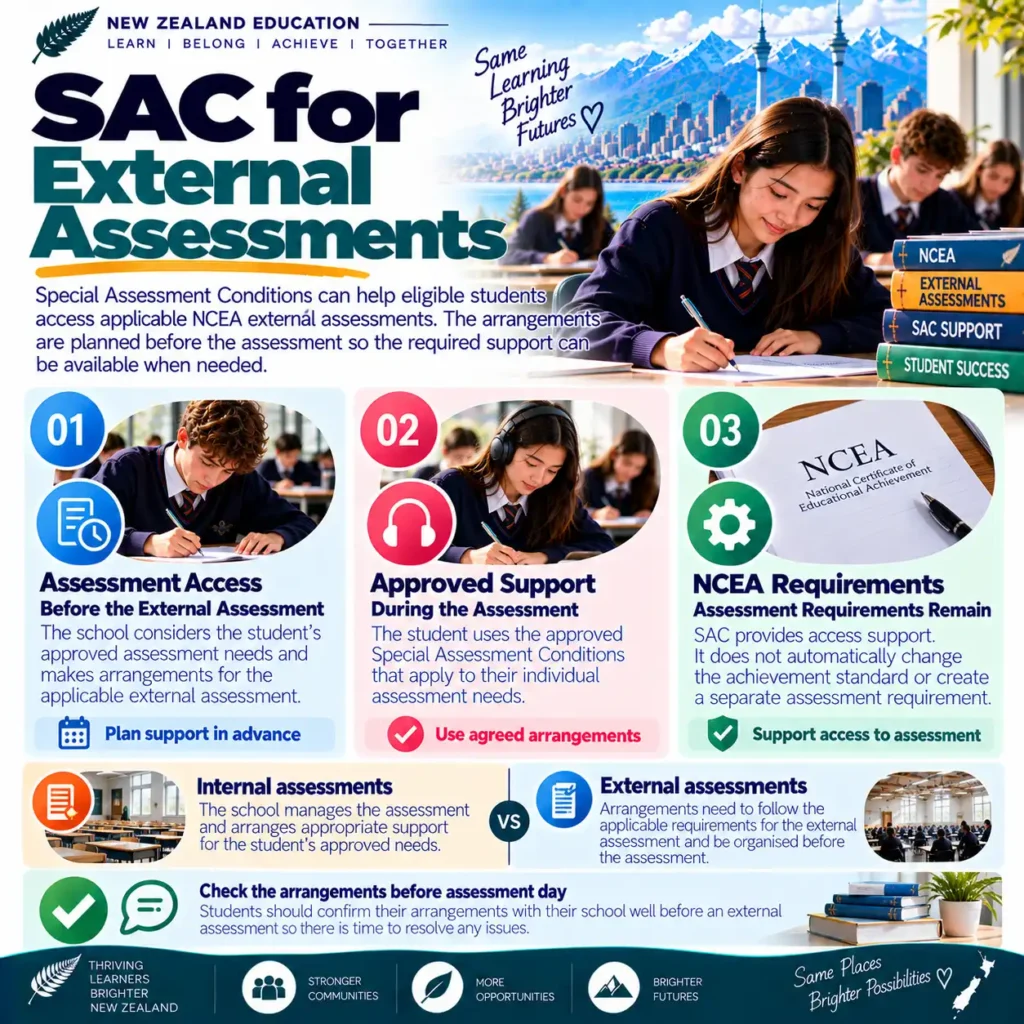
SAC for External Assessments
Special Assessment Conditions can help eligible students access applicable NCEA external assessments. The arrangements are planned before the assessment so the required support can be available when needed.
Before the External Assessment
The school considers the student’s approved assessment needs and makes arrangements for the applicable external assessment.
Plan support in advanceDuring the Assessment
The student uses the approved Special Assessment Conditions that apply to their individual assessment needs.
Use agreed arrangementsAssessment Requirements Remain
SAC provides access support. It does not automatically change the achievement standard or create a separate assessment requirement.
Support access to assessmentThe school manages the assessment and arranges appropriate support for the student’s approved needs.
Arrangements need to follow the applicable requirements for the external assessment and be organised before the assessment.
Students should confirm their arrangements with their school well before an external assessment so there is time to resolve any issues.
Special Assessment Conditions vs Derived Grades
Special Assessment Conditions and derived grades are different forms of NCEA assessment support. Understanding the difference can help students and families discuss the right process with their school.
Provides approved support or adjustments so an eligible student can access an assessment.
Provides an evidence-based grade in an eligible situation where a student cannot complete an assessment or their performance is impaired.
The focus is on reducing barriers to assessment access.
The focus is on determining a grade from appropriate existing evidence when the derived grade process applies.
Arrangements can be planned for applicable assessments based on the student’s individual needs.
Applies in specific circumstances such as an eligible medical reason, significant event or approved national representation.
The student completes the assessment using the approved conditions.
An approved derived grade can be used where the student is unable to complete the assessment or their performance is affected.
Support to Access
Think of SAC as assessment support that helps an eligible student access and complete an assessment.
Evidence-Based Grade
A derived grade is a separate process used when an eligible circumstance prevents or affects the student’s assessment performance.
SAC and derived grades address different assessment situations. The appropriate process depends on the student’s circumstances and the applicable NZQA requirements.
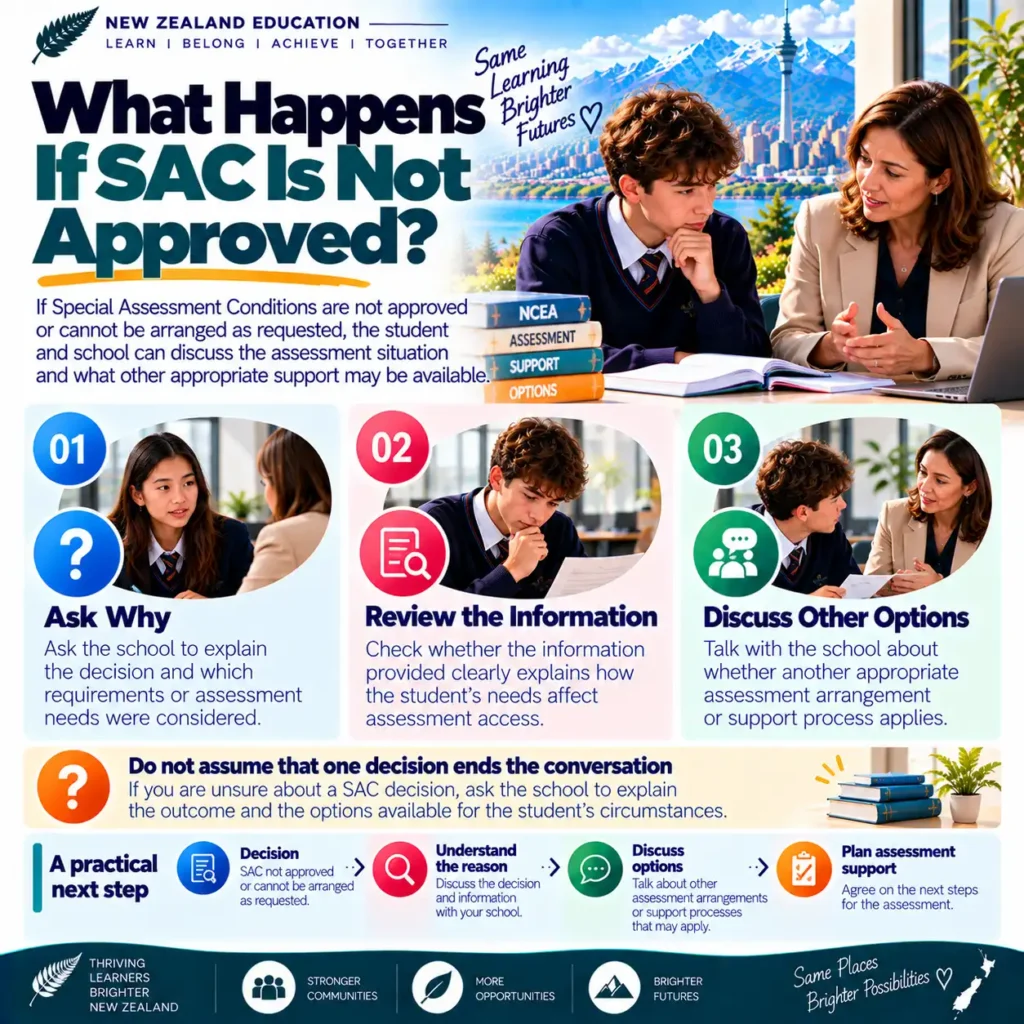
What Happens If SAC Is Not Approved?
If Special Assessment Conditions are not approved or cannot be arranged as requested, the student and school can discuss the assessment situation and what other appropriate support may be available.
Ask Why
Ask the school to explain the decision and which requirements or assessment needs were considered.
Review the Information
Check whether the information provided clearly explains how the student’s needs affect assessment access.
Discuss Other Options
Talk with the school about whether another appropriate assessment arrangement or support process applies.
If you are unsure about a SAC decision, ask the school to explain the outcome and the options available for the student’s circumstances.
Common Mistakes & Misunderstandings About SAC
Special Assessment Conditions can be easier to understand when students and families know what SAC does, what it does not do, and why individual assessment needs matter.
Thinking SAC Is Automatically Available
Having a learning, medical, physical or sensory need does not automatically mean that every form of SAC applies. The support should relate to the student’s assessment access needs.
Waiting Until the Assessment Is Close
Assessment support may require planning and documentation. Leaving the conversation until the last moment can make it harder to arrange appropriate support.
Assuming SAC Changes the Assessment Standard
SAC is intended to reduce barriers to assessment access. It does not automatically create a different NCEA achievement standard or qualification.
Confusing SAC With a Derived Grade
SAC and derived grades have different purposes. SAC provides assessment access support, while a derived grade is an evidence-based grade process used in specific eligible circumstances.
Assuming Every Assessment Uses the Same Arrangement
The appropriate support can depend on the student’s needs and the assessment. An arrangement used in one situation may not automatically apply in every assessment.
Not Checking the Arrangement With the School
Students should discuss their assessment arrangements with the school and make sure they understand what support has been organised before an important assessment.
SAC is individual assessment support. The most useful first step is to discuss the student’s needs with the school early and understand the arrangements that apply.
FAQs About NCEA Special Assessment Conditions
Here are common questions about eligibility, applications, support and how Special Assessment Conditions work for NCEA assessments.
What are NCEA Special Assessment Conditions? +
Special Assessment Conditions are approved arrangements that help eligible students access NCEA assessments when individual needs may affect how they read, write, process information or otherwise complete an assessment.
Who can receive Special Assessment Conditions? +
Students with eligible learning, medical, physical, sensory or other individual needs may be considered. Eligibility depends on the student’s assessment access needs and the applicable requirements.
Does having a diagnosis automatically qualify a student for SAC? +
No. A diagnosis or condition does not automatically mean that every form of SAC applies. The relevant issue is how the student’s needs affect access to assessment and what support is appropriate.
Can SAC be used for internal assessments? +
SAC can be relevant to applicable internal assessments. Students should discuss their individual needs and assessment arrangements with their school.
Can SAC be used for external assessments? +
Eligible students may receive approved support for applicable external assessments. The arrangements need to follow the relevant assessment requirements and should be organised in advance.
What evidence may be needed for SAC? +
The information required depends on the student’s circumstances and the support being considered. Relevant information should help the school understand the student’s assessment access needs.
Is SAC the same as an NCEA derived grade? +
No. SAC provides approved support or adjustments for assessment access. A derived grade is a separate evidence-based grading process that applies in specific eligible circumstances.
Does SAC give a student an advantage? +
SAC is intended to reduce barriers to assessment access for eligible students. The support should relate to the student’s individual needs and the requirements of the assessment.
When should a student ask about SAC? +
Students should talk with their school as early as possible when assessment support may be needed. Early planning allows the school time to consider the appropriate arrangements.
What should I do if I am unsure about my SAC arrangements? +
Contact the school and ask what arrangements have been approved, which assessments they apply to and what support will be available. The school can explain the process for the student’s circumstances.
Because SAC depends on individual assessment needs, students and parents should confirm the relevant requirements and arrangements with their school.
Understanding NCEA Special Assessment Conditions
Special Assessment Conditions can help eligible students access NCEA assessments when individual needs create barriers to reading, writing, processing information or completing an assessment in the usual way.
SAC is based on the student’s individual assessment access needs.
The appropriate support can depend on the student and the assessment.
Students and families should discuss possible support with their school as early as possible.
SAC is different from the separate NCEA derived grade process.
If you think assessment support may be needed, talk with the school about the student’s needs, the applicable assessment and the arrangements that may be available.