

Choosing NCEA Subjects With Confidence
Choosing NCEA subjects is about more than picking classes for the next school year. Your interests, strengths, future study plans and possible career options can all help shape your choices.
Start With the BasicsWhat Is NCEA Subject Selection?
NCEA subject selection is the process of deciding which school subjects or courses to take as you work towards your NCEA goals. A good choice considers what you enjoy, where your strengths are and what you may want to study or do in the future.
Your Interests
Think about the subjects and topics you genuinely enjoy.
Your Strengths
Consider the subjects where your skills and learning style fit well.
Future Options
Check whether your choices support possible study or career pathways.
Keep your options in mind: You do not need to have your entire future planned before choosing subjects. If you are unsure, a balanced choice can help you explore different interests while keeping future pathways open.
Table of Contents
What to Consider Before Choosing NCEA Subjects
There is no single set of subjects that is right for every student. Your interests, strengths and future plans can all help you decide which courses may suit you.
What You Enjoy
Think about the subjects, topics and types of learning you enjoy. Interest can help you stay engaged as the work becomes more challenging.
Your Strengths
Look at the subjects where you have developed useful skills and feel comfortable learning. Your previous school experience can provide helpful clues.
Future Study Plans
If you already have a course, qualification or area of study in mind, check whether it has particular subject or achievement requirements.
Future Career Options
Consider whether your possible career interests point towards particular subjects. You do not need to decide on one career before making your choices.
Check the actual requirements
If a future course or pathway interests you, check its current entry requirements rather than relying on assumptions. Requirements can differ between programmes and providers.
If you are unsure about your direction, you can still make a sensible choice. Talk with your school, teachers, careers adviser and whānau, then consider which subjects give you useful options for the next stage.
Choosing Subjects for NCEA Level 1
Level 1 can be a useful stage for exploring your strengths and interests while building a foundation for later study. Your choices do not need to decide your entire future.
What to think about
Keep your choices reasonably broad
If you are still exploring your future, a balanced selection can give you opportunities to discover your strengths before making more specialised choices later.
Planning tip: Before selecting a course, check what your school offers and whether any future study options you are considering have specific subject requirements.

Choosing Subjects for NCEA Level 2
Level 2 is a useful time to make your subject choices more focused. You can build on subjects you enjoy while thinking more carefully about future study, training and career options.
Build on Level 1
Look at the subjects you studied previously and consider which ones you want to continue or develop further.
Think About Next Steps
If you have possible tertiary, training or career plans, check whether particular subjects may be useful or required.
Check Course Requirements
Do not rely on general advice alone. Check the current entry requirements for courses or programmes you may want to enter.
Plan around your possible pathway
If you are considering a particular area of tertiary study or training, look ahead and identify any subjects or achievement requirements that could affect your choices.
Keep useful options open
You do not need to have a fixed career plan. Consider subjects that match your strengths and interests while avoiding choices that unnecessarily close future options.
Before you confirm your choices: review your school’s available courses and discuss your plans with relevant teachers, a careers adviser or your whānau.
Choosing Subjects for NCEA Level 3
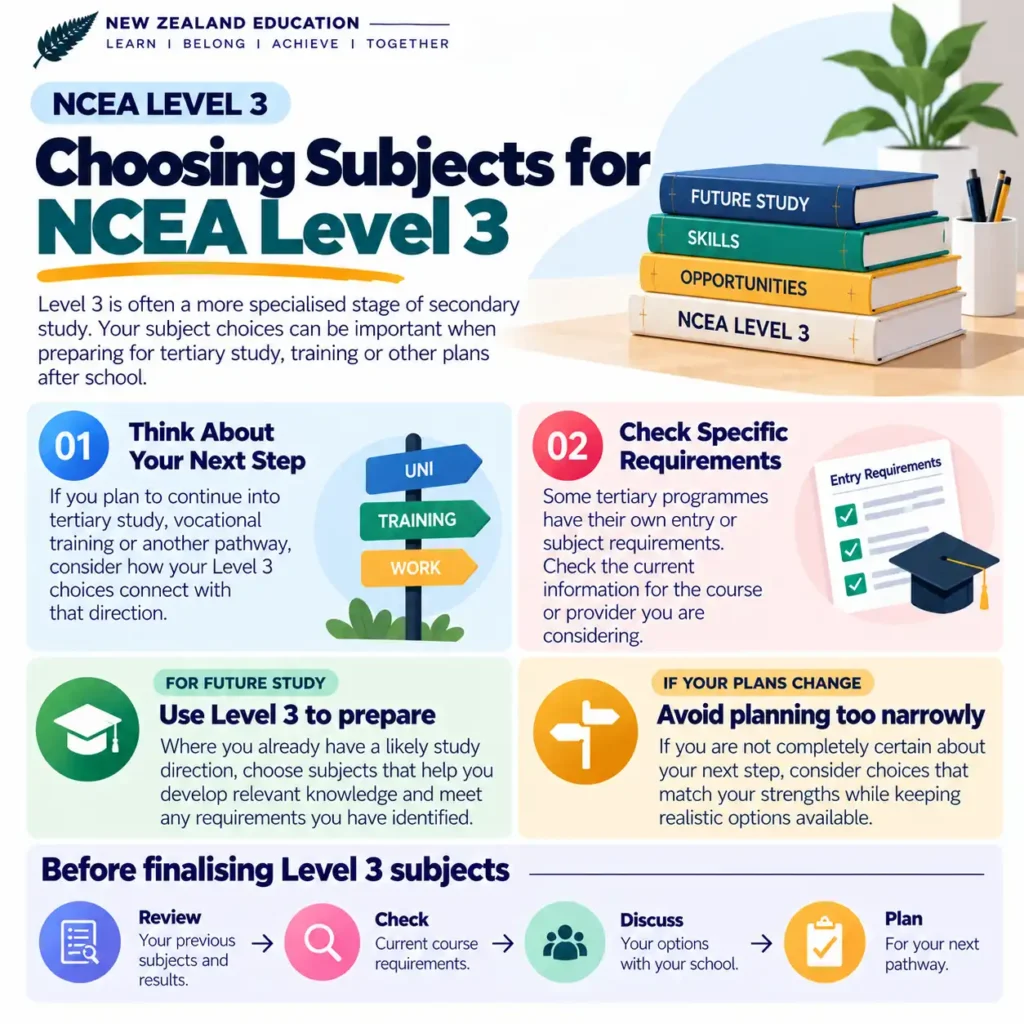
Level 3 is often a more specialised stage of secondary study. Your subject choices can be important when preparing for tertiary study, training or other plans after school.
Think About Your Next Step
If you plan to continue into tertiary study, vocational training or another pathway, consider how your Level 3 choices connect with that direction.
Check Specific Requirements
Some tertiary programmes have their own entry or subject requirements. Check the current information for the course or provider you are considering.
Use Level 3 to prepare
Where you already have a likely study direction, choose subjects that help you develop relevant knowledge and meet any requirements you have identified.
Avoid planning too narrowly
If you are not completely certain about your next step, consider choices that match your strengths while keeping realistic options available.
Before finalising Level 3 subjects
Choosing Subjects for University Entrance
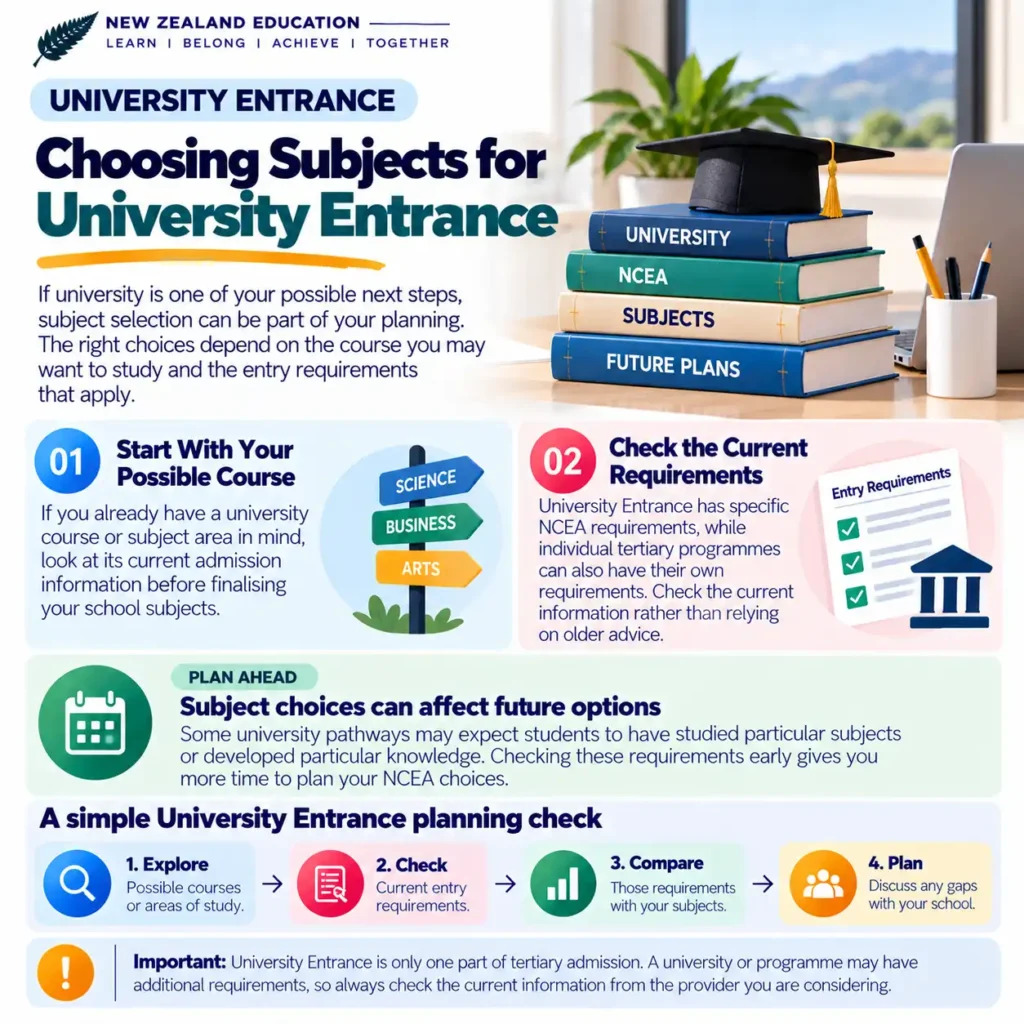
If university is one of your possible next steps, subject selection can be part of your planning. The right choices depend on the course you may want to study and the entry requirements that apply.
Start With Your Possible Course
If you already have a university course or subject area in mind, look at its current admission information before finalising your school subjects.
Check the Current Requirements
University Entrance has specific NCEA requirements, while individual tertiary programmes can also have their own requirements. Check the current information rather than relying on older advice.
Subject choices can affect future options
Some university pathways may expect students to have studied particular subjects or developed particular knowledge. Checking these requirements early gives you more time to plan your NCEA choices.
A simple University Entrance planning check
Important: University Entrance is only one part of tertiary admission. A university or programme may have additional requirements, so always check the current information from the provider you are considering.
Choosing Subjects for Careers and Future Study
Your NCEA subjects can help you build knowledge and skills for future study, training and career pathways. If you already have an area in mind, use it as one factor when making your choices.
Health and Science
Students considering health or science-related study may want to explore relevant science and mathematics subjects and check the requirements of specific tertiary programmes.
Engineering and Technology
Mathematics, science and technology-related subjects may support preparation for some pathways. Always check the actual requirements of the programme you are considering.
Business and Commerce
Students interested in business-related pathways can explore subjects that develop numeracy, communication, analytical thinking and an understanding of business concepts.
Creative and Communication
Arts, design, media and communication pathways may benefit from subjects that develop creative thinking, writing, presentation and practical skills.
Trades and vocational options
If you are considering a trade, apprenticeship or vocational pathway, look at the skills and subjects that may support that direction and check the entry information for the provider or programme.
You do not need one fixed career plan
It is normal for plans to change. Choose subjects that match your interests and strengths while keeping realistic future options available.
A simple pathway check
Remember: A subject can be useful without being a strict requirement, and requirements vary between courses and providers. Check the current information for the pathway you are considering.
What If You Don’t Know What Career You Want?
You do not need to know your future career before choosing NCEA subjects. Many students are still exploring their interests, strengths and possible pathways while making their subject choices.
A practical way to approach your choices
Choose a balanced mix
When your future direction is unclear, consider subjects that reflect your interests and strengths while giving you opportunities to explore different areas.
Your plans can change
Choosing subjects is not the same as choosing a lifelong career. As you learn more about yourself and different pathways, your plans may develop or change.
How to Compare Two or More Subjects
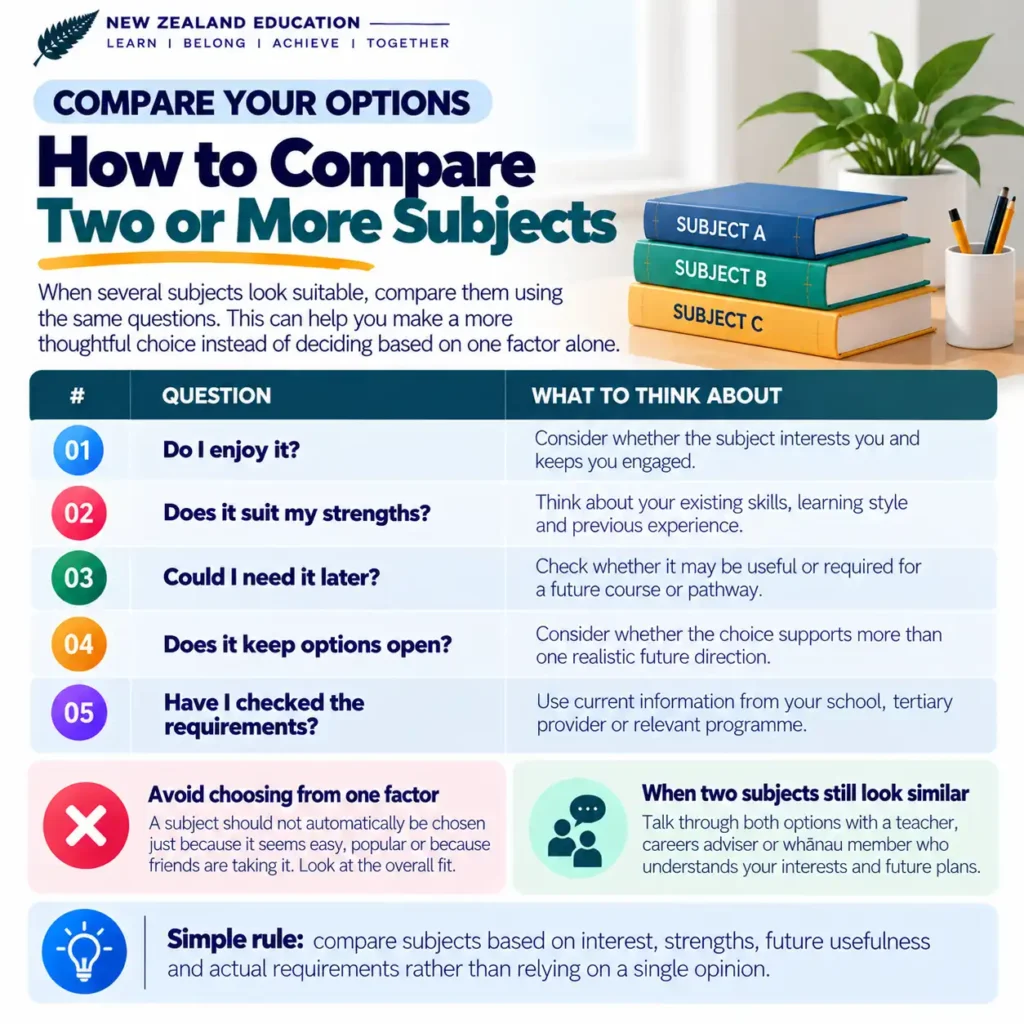
When several subjects look suitable, compare them using the same questions. This can help you make a more thoughtful choice instead of deciding based on one factor alone.
Avoid choosing from one factor
A subject should not automatically be chosen just because it seems easy, popular or because friends are taking it. Look at the overall fit.
When two subjects still look similar
Talk through both options with a teacher, careers adviser or whānau member who understands your interests and future plans.
Simple rule: compare subjects based on interest, strengths, future usefulness and actual requirements rather than relying on a single opinion.
Common NCEA Subject Selection Mistakes
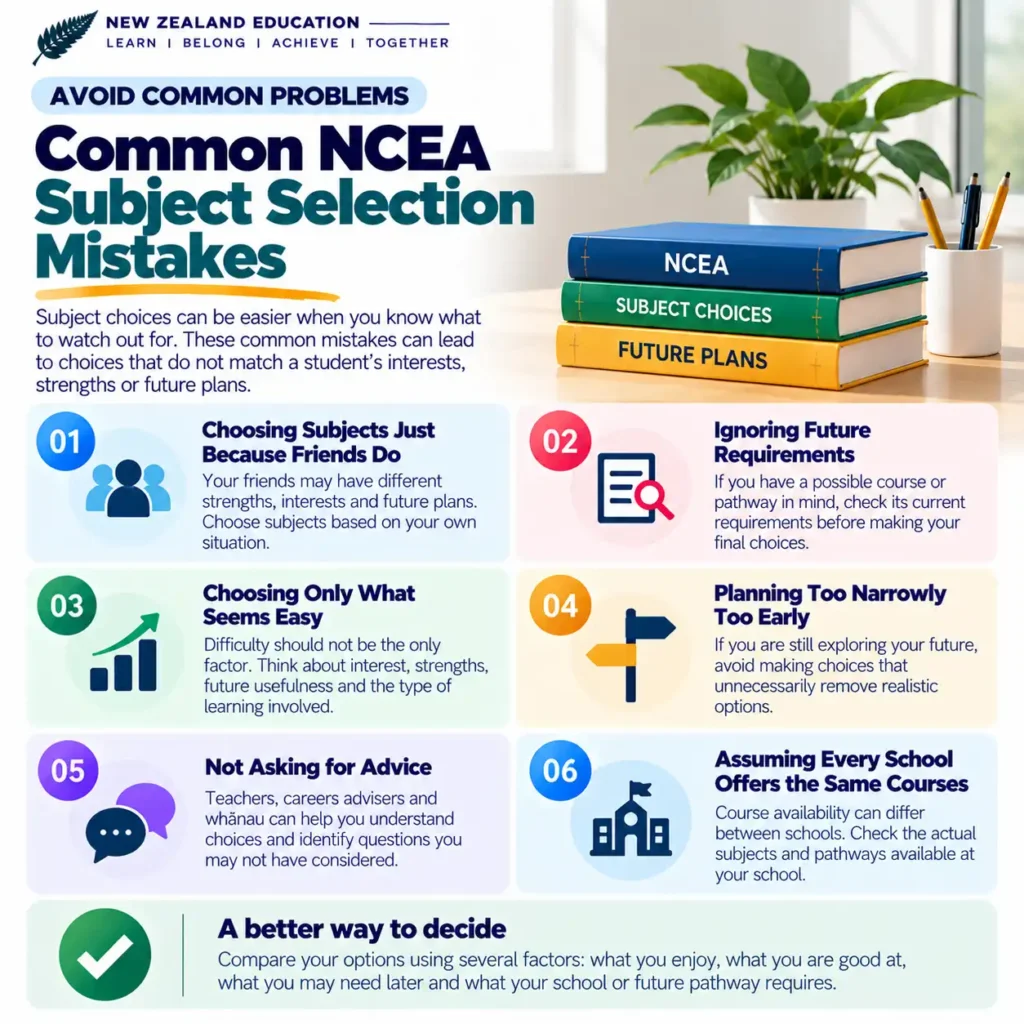
Subject choices can be easier when you know what to watch out for. These common mistakes can lead to choices that do not match a student’s interests, strengths or future plans.
Choosing Subjects Just Because Friends Do
Your friends may have different strengths, interests and future plans. Choose subjects based on your own situation.
Ignoring Future Requirements
If you have a possible course or pathway in mind, check its current requirements before making your final choices.
Choosing Only What Seems Easy
Difficulty should not be the only factor. Think about interest, strengths, future usefulness and the type of learning involved.
Planning Too Narrowly Too Early
If you are still exploring your future, avoid making choices that unnecessarily remove realistic options.
Not Asking for Advice
Teachers, careers advisers and whānau can help you understand choices and identify questions you may not have considered.
Assuming Every School Offers the Same Courses
Course availability can differ between schools. Check the actual subjects and pathways available at your school.
A better way to decide
Compare your options using several factors: what you enjoy, what you are good at, what you may need later and what your school or future pathway requires.
A Simple NCEA Subject Selection Checklist
Use this checklist before confirming your NCEA subjects. It can help you review your choices from several angles rather than relying on one factor.
You do not need every answer today
If some choices are still unclear, make a list of your questions and discuss them with your school before you confirm your subjects.
Final check
Your subject choices should make sense for you, your current learning and the options you may want to explore next. If you are unsure about a requirement, check the current information before making your final decision.
FAQs About NCEA Subject Selection
These common questions can help students and whānau understand what to consider when choosing NCEA subjects.
Still unsure? Write down the subjects you are considering and the questions you have, then discuss them with your school before making your final choices.
Making Your NCEA Subject Choices
Choosing NCEA subjects is a personal decision. The most useful approach is to consider what you enjoy, where your strengths are and what you may want to do in the future.
Remember: You do not need to have your entire future mapped out. Make informed choices based on your current interests and strengths, check the requirements that matter to you, and keep realistic options open where possible.